Memory
Enhancement
Memory is a peculiar kind of time traveler: it can abandon us in familiar places or return us to moments we thought were lost. I became drawn to its mysteries, from the fragile recollections of laboratory mice to the hard-won independence of recovering patients. Somewhere between scientific inquiry, human resilience, and creative expression, I discovered how deeply remembering shapes our lives.

Meridian Flashcards
Founder & Art Illustrator
The human body has its own geography, yet most of us navigate it without a map. That thought inspired Meridian Flashcards. I wanted to translate traditional acupressure knowledge into something students and families could explore without confronting pages of unfamiliar terminology. Working alongside two experienced doctors, I studied the anatomical locations, functions, traditional indications, and safety considerations of twenty acupoints. Every illustration presented a peculiar challenge: how could a small printed card communicate both cultural heritage and anatomical clarity? I began treating each acupoint as a destination, with the illustration serving as a map and medical guidance providing the boundaries for responsible exploration.


My drawing process felt like inviting two centuries to share a table. Classical East Asian ink-wash aesthetics brought mountains, clouds, bamboo, and calligraphic motifs; modern anatomical illustration demanded recognizable body proportions and precise visual markers. Neither language could dominate. Too much ornament obscured the information, while excessive clinical simplicity erased the cultural character I wanted to preserve. I developed a consistent two-sided format, combining body-region illustrations with location, function, key indications, and safety notes. The most difficult decisions often involved subtraction: removing a decorative element, simplifying a diagram, or repositioning a label. I discovered that good educational illustration is not merely beautiful. It knows exactly when beauty must step aside for understanding.

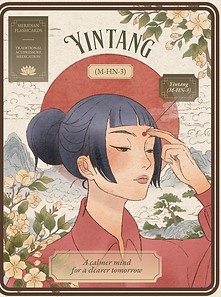


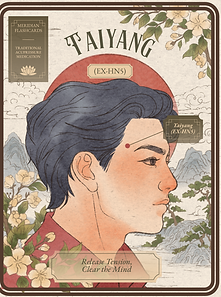

A QR code is an unremarkable-looking square, yet I wanted it to become the most adventurous element on each flashcard. The printed illustration could introduce an acupoint, but the digital version could extend that encounter beyond the physical card. By connecting the twenty designs to online resources and a health-information chatbot associated with Viet Duc Hospital doctors, we created another way for users to explore the material. The platform recorded over 3,300 visits and more than 500 chatbot users. Those figures mattered because they represented interactions beyond the original printed sets. Still, digital accessibility demanded responsibility: a convenient answer must never be mistaken for an individual medical diagnosis.
A flashcard looks different when it leaves a designer's desk and enters a classroom. In Hoa Binh and Lao Cai, our free workshops introduced acupoint awareness and gentle acupressure to more than one hundred participants, with local healthcare staff supporting the educational activities. Later, in mountainous Thai Nguyen, we distributed sixty flashcard sets during a three-day Brain & Relaxation Wellness campaign for middle-school students. Mandala drawing accompanied discussions about stress, sleep, and relaxation, creating a gentler entry into health education. I found meaning in the contrast between these activities: one encouraged careful attention to the body, while the other invited students to slow down through art. Both reminded me that learning becomes more approachable when participation feels welcoming.
Department of Rehabilitation
Viet Duc Friendship Hospital
Intern
In a rehabilitation room, the simplest movements can carry extraordinary weight. A patient reaching toward an object, maintaining balance, or following a short instruction may be working toward an ability that others perform without conscious effort. During my internship at Viet Duc Friendship Hospital, I helped prepare therapy spaces and equipment before assisting licensed therapists with cognitive and physical rehabilitation activities for twenty-four patients. Exercises involving attention, memory, coordination, reflexes, and mobility required careful observation and patience. I began appreciating how different rehabilitation was from a laboratory experiment. Progress could be gradual, uneven, and deeply personal. A movement that appeared small from the outside might represent an important step toward independence.


Twenty-three pages were enough to organize my observations, but not enough to contain everything rehabilitation taught me. My report compared three cases involving mild cognitive impairment, mild traumatic brain injury, and stroke, examining their rehabilitation goals, interventions, and responses. Each case demanded a different perspective: memory difficulties could affect daily routines, while impaired coordination or mobility could reshape a person's independence. I also developed a ten-page brain-health infographic covering sleep, nutrition, exercise, stress management, and cognitive activity, with one hundred printed copies prepared for patients and families. Translating complex information into accessible language became another form of responsibility. I learned that careful documentation matters most when it helps people understand the next step.


Youtube Series “Beyond Recovery”
Owner & Host
A medical record can describe a brain injury, but never the world it leaves behind. This realization inspired Beyond Recovery, my bilingual interview series exploring life after neurological trauma. I helped assess 50+ patients across three Hanoi hospitals through questionnaires and MoCA tests, searching beyond recovery statistics for stories of resilience. Among six episodes, I encountered a survivor relearning to walk after paralysis, a child navigating neurological difficulties, a mother confronting the emotional weight of caregiving, and a doctor explaining nutrition's role in rehabilitation. Their experiences revealed how memory, mobility, language, and confidence intertwine throughout recovery. Averaging 5,000+ views and 30+ comments per episode, the series carried these voices beyond hospital walls. What stayed with me was something no clinical percentage could capture: the extraordinary courage hidden in ordinary achievements, like standing independently, speaking clearly, or reclaiming a small piece of everyday life.
"Evaluation of the Memory-Enhancing Effects of Ilex Kudingcha Leaf Extract on Experimental Mice Through Behavioral Tests"
Co-Author/Researcher
How does one measure something as elusive as memory in a creature that cannot describe its thoughts? That question followed me into our study of Ilex kudingcha leaf extract. We prepared the extract using 80% ethanol and examined memory-impaired mice through three behavioral tests: Modified Y-maze, Object Recognition, and Passive Avoidance. Each test revealed a different dimension of remembering, from recognizing familiar objects to learning from unpleasant experiences. The extract improved recognition memory at both tested doses, yet spatial memory showed no significant improvement. That contrast fascinated me. Memory was not one indivisible ability, but a collection of processes that could respond differently to the same intervention.
